There's a kind of person you've probably noticed.
They walk into a room and immediately rearrange the furniture in their head. They look at a product and feel what's wrong with it before they can say why. They pick up on the emotional temperature of a conversation before a single word lands. They make something, and somehow it fits a feeling you didn't know you had until you experienced it.
We call it taste. But taste is just the part you can see.
What's underneath it is older, stranger, and way more interesting.
The First Signal
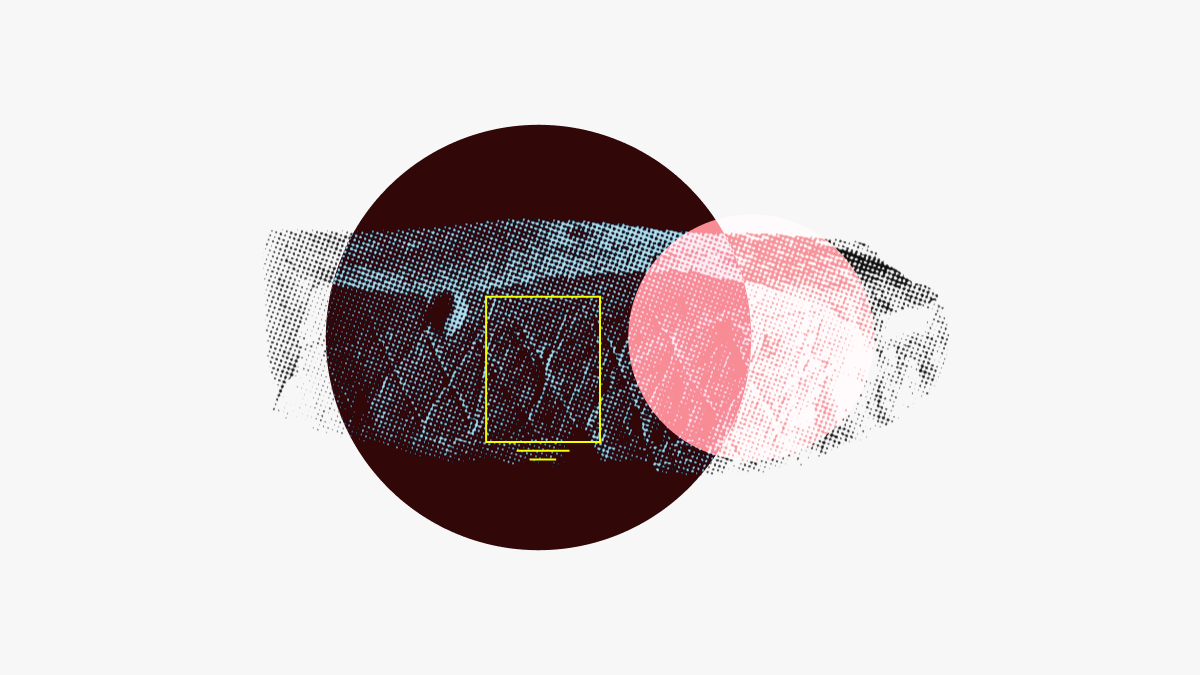
75,000 years ago, someone on the southern tip of Africa scratched a crosshatched pattern into a piece of red ochre.
Not to hunt. Not to survive. Not for any reason we can measure.
They felt something so specific and internal that they needed the world to hold it for them. So they made a mark. Pulled from Blombos Cave in South Africa, that piece of ochre is one of the oldest known examples of symbolic thinking on earth. Not art in the polished sense. More like the first attempt to move the inside of one mind into the experience of another.
That impulse didn't stop there.
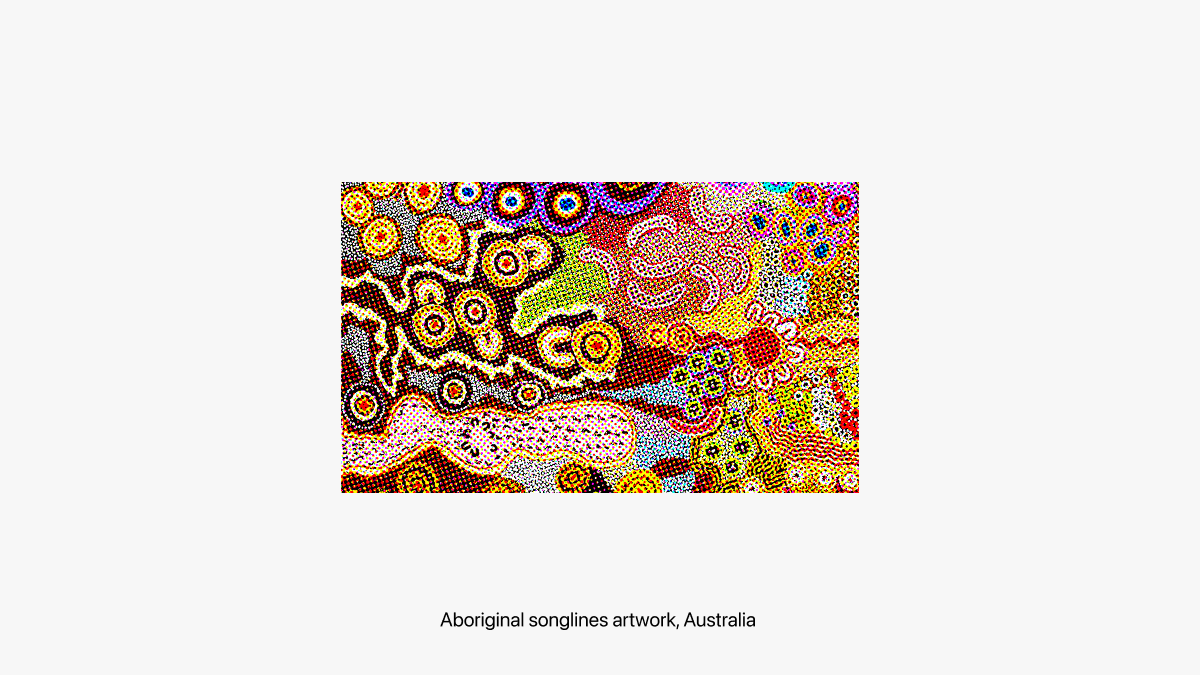
The Aboriginal Australians built songlines over 50,000 years, entire navigational systems encoded in melody where each verse mapped a physical feature of the land. A single songline could stretch 3,500 kilometres across the continent, crossing language groups, changing tongue but keeping the same melodic shape because the melody described the terrain. You navigated Australia by singing it. They understood intuitively that rhythm encodes more durably than instruction. That feeling is a technology.
In the Inca Empire, the quipu stored census data, history, and law in knotted strings. You read it with your hands. The Yoruba griots of West Africa held thousands of years of genealogy in oral performance, not as backup to writing but as the primary carrier of knowledge. The Maori carved history into skin. Different continents, different centuries, same instinct: the most important things shouldn't live in abstraction. They should live in the body.
Every civilization that ever existed built creative technology around how humans actually store and transmit felt experience. None of them chose the purely intellectual first. They chose rhythm, texture, image, motion. The intellect came after. Always.
What Intuition Actually Is
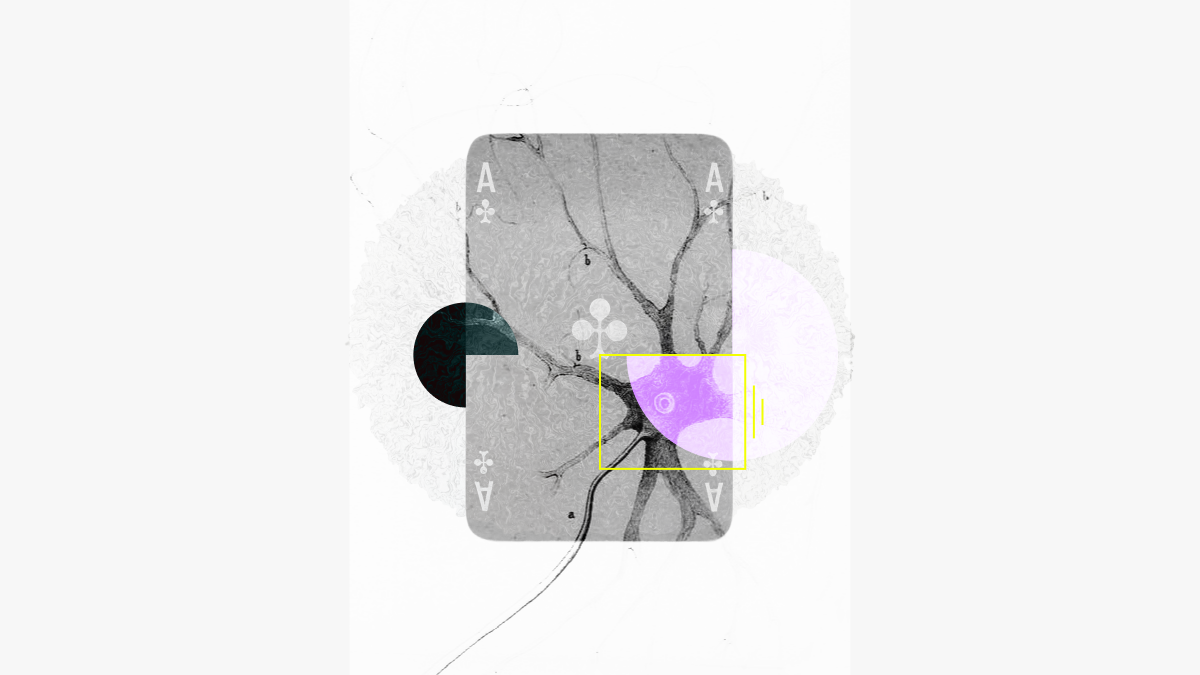
Most people treat intuition like it's mystical. It's not. It's just faster than thought.
There's a study from the University of Iowa where researchers gave subjects four decks of cards and told them to win money by flipping them. Two decks were rigged. Big wins up front but they'd drain you over time. Two were boring but consistently profitable. Most people figured out the right decks consciously around card 50. They could explain why around card 80.
Their palms started sweating at card 10.
The body had already solved the problem. The nervous system recognized the pattern and flagged it forty cards before a single conscious thought formed. The gut feeling wasn't woo. It was the accumulated record of every similar situation the body had ever processed, running simulations faster than language could name them.
Karl Friston at UCL built a framework called the free energy principle that explains why. The brain isn't a receiver of reality. It's a prediction machine. At every moment, your mind is running a model of what it expects to happen, and sensory data just corrects the errors. You don't experience the world. You experience your brain's running prediction of the world, updated constantly in real time.
Intuition is what happens when that prediction engine is so deeply trained, so dense with compressed experience, that it runs faster than awareness can keep up with. The expert doesn't perceive and then react. They've already predicted the outcome before the perception fully registers.
A chess grandmaster doesn't calculate every move. They feel the shape of the board. A surgeon doesn't run through a checklist. They feel when something's off before the monitors confirm it. A great editor doesn't measure every sentence. They feel the rhythm break.
This is what taste actually is. Not preference. A prediction system trained on everything you've ever felt, seen, made, and absorbed. When you look at something and know it's wrong before you can explain why, that's not vague. That's a finely calibrated machine doing exactly what it was built to do.
The question is: where does it come from, and who has it?
The Pattern in the People
Look closely enough at the people who built things that became culture, and you find the same thing every time.
They all collected experience from places that had no obvious relevance to what they were building. And then at some point, the dots connected in a way nobody could have predicted or planned.
Steve Jobs dropped out of Reed College in 1972 and kept sleeping on the floor of friends' dorm rooms, returning Coke bottles for five cents each to buy food. One of the classes he sat in on, with no credit, no practical reason, was calligraphy taught by a Trappist monk named Robert Palladino. He learned about serif and sans-serif typefaces. About varying space between letter combinations. About what makes typography feel different from the inside.
Ten years later, when he was building the first Macintosh, all of it came back. The Mac was the first personal computer with beautiful, proportionally spaced typography. And since Windows copied the Mac, every computer screen you've ever read anything on carries that forward. A monk teaching a broke college dropout to feel letterforms in 1972 shaped how all of humanity reads on screens today.
Jobs said it himself: you can't connect the dots looking forward. You can only connect them looking backward.
That's not a productivity insight. That's a description of how intuition actually forms. You absorb experiences that seem unrelated. They compress into your nervous system. And when a problem appears that those experiences are structurally relevant to, the prediction machine fires. You feel the answer before you can diagram it.
Virgil Abloh did this across every axis simultaneously. Engineering degree. Architecture master's at IIT, studying under the influence of Bauhaus. Creative director for Kanye. DJ. Streetwear. Louis Vuitton. The reason he could take a quotation mark and put it around the word "AIR" on a Nike shoe and make people camp outside overnight wasn't technical skill. It was that he'd absorbed so much from so many different worlds, music, architecture, street culture, fine art, luxury fashion, that his intuition about what would resonate was running way ahead of what any market research could have produced.
His 3% rule made this explicit. He said a creative only needs to tweak a pre-existing concept by 3% to make a genuine cultural contribution. A DJ edits a song. A designer moves a swoosh. The novelty is small. The felt shift is enormous. Because the 3% change is hitting the right nerve. And you can only know which nerve that is if you've absorbed enough of the culture to feel where the tension lives.
That's not a design rule. It's a description of intuition operating in real time.
The pattern shows up everywhere once you see it. Kanye West absorbing soul records, chipmunk samples, Berlin minimalism, gospel, and Japanese aesthetics all at once before making The College Dropout, which didn't sound like anything that existed before it. Raf Simons pulling from Belgian punk and Warhol and menswear history simultaneously to produce collections that felt like they came from a future that hadn't arrived yet.
None of them were working from a rational process. They were working from a felt sense of what wanted to exist. The rational process came after, when they had to explain it to other people.
When the Filter Drops
Here's where it gets stranger. And more important.
In 1996, neurologist Bruce Miller at UCSF started noticing something in his patients with frontotemporal dementia. FTD degrades the frontal and temporal lobes: the brain regions responsible for language, social behaviour, learned inhibition. The parts that manage all the filters society installs in you from childhood. The part that asks "is this appropriate," "does this make sense," "what will people think."
As those regions deteriorated in his patients, people who had never made anything in their lives started making art. A retired accountant began sculpting hyperrealistic animals with compulsive precision. Former managers painted vibrant, obsessive scenes from memory for hours a day. No prior training. No deliberate decision. Just a sudden, overwhelming need to make things, erupting from underneath the damaged filters like pressure through a crack.
Miller called it paradoxical functional facilitation. When one system quiets, another comes online. The destruction of the conditioned, verbal, socially-managed layer revealed a creative faculty that had been there the whole time, running silently beneath the noise of normal cognition.
The art was almost never abstract. It was precise. Visual. Tied to memory that turned out to be completely intact even as language dissolved. The patients weren't losing themselves. They were, in some structural sense, finding a self that had never been allowed to operate while the executive systems were in charge.
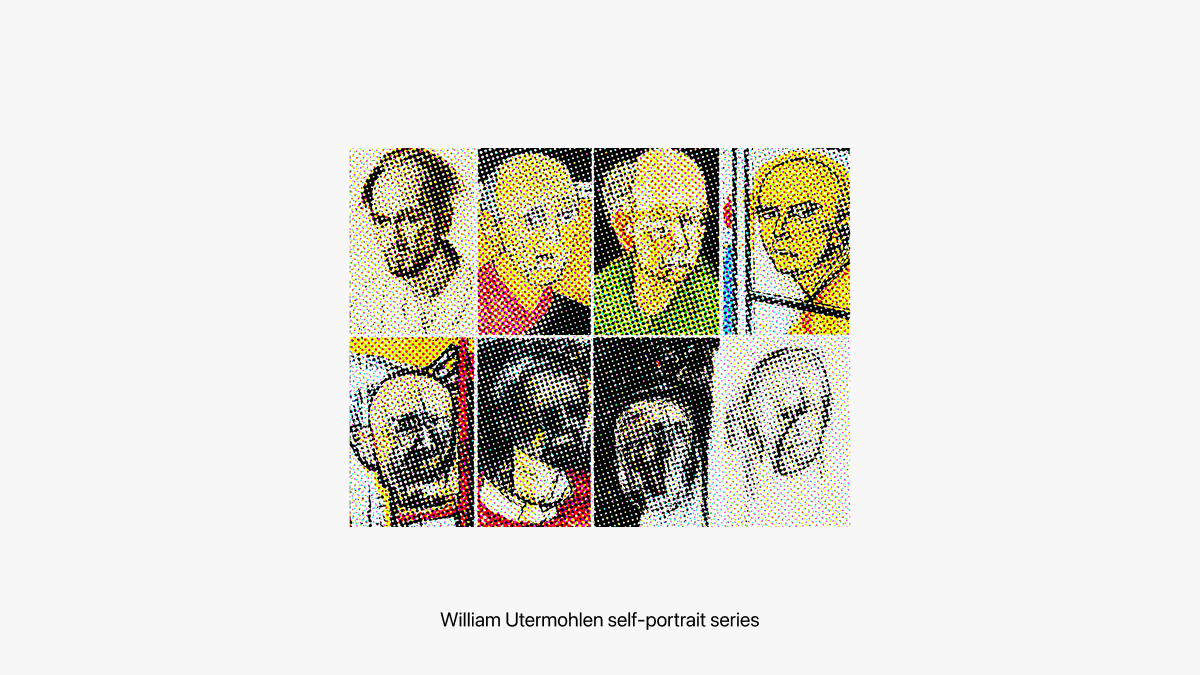
William Utermohlen was an accomplished painter who was diagnosed with Alzheimer's in 1995. He started painting self-portraits year after year as the disease progressed. The trained technical control he'd spent a lifetime building gradually broke down. What came through instead was something rawer, more exposed, communicating in a register that his wife, an art historian, said was more direct than anything words could carry. The technical facility died. The need to reach didn't.
Robin Carhart-Harris at Imperial College London has documented something structurally similar under psilocybin. The default mode network, the brain's self-referential control system, the thing that monitors your behaviour against social expectation, quiets significantly. Novel connections form between regions that don't normally talk to each other. What users consistently describe isn't noise or chaos. It's a felt increase in clarity, in access to something they recognise as more true than their normal state.
Different mechanism. Same basic finding: the most direct creative faculty in humans isn't the sophisticated, conditioned, verbal layer. It's something older that's been sitting underneath it, mostly suppressed, waiting.
The system that society shaped you to run on is optimized for predictability and social legibility. It's useful. But it's also the reason most people never make anything that actually reaches.
The people who build things that become culture aren't running that system. Or they've learned, through accumulated experience and repetition and trust, to hear the signal underneath it.
What Comes After the Map
In October 2024, a team of researchers published something that doesn't get nearly enough attention outside of neuroscience circles.
They mapped every single neuron in an adult fruit fly's brain. All 139,255 of them. Every synapse between them. Over 50 million connections, traced individually and made publicly available through a platform called FlyWire. A Berkeley researcher named Phil Shiu then took that map and simulated the entire thing on a laptop. The simulation predicted, with over 90% accuracy, which neurons in a real fly's brain would activate when you stimulate its taste receptors with sugar.
They simulated a brain. Ran it on a laptop. And it worked.
The fly brain is obviously a long way from a human brain. A human brain has roughly 86 billion neurons and somewhere around 100 trillion synaptic connections. The fly has 140,000. The scale difference is enormous. But the researchers themselves said it plainly: the methodology transfers. The next step is mice. The step after that, at some point in the next few decades, is us.
Whole Brain Emulation. A complete wiring diagram of a human brain, mapped synapse by synapse, and then run as a simulation.
When that happens, everything changes in ways that the current AI conversation isn't even close to accounting for.
Here's what makes WBE categorically different from anything we've built so far.
Current AI, large language models, image generators, all of it, is trained on the outputs of human minds. The text, the images, the music. It learns the surface patterns of what human creativity produces. It's very good at this. Impressively good. But it's working from the outside in. It's reading the residue of thought and learning to produce more residue that resembles it.
WBE is different in kind. It's not learning from the outputs of a human mind. It's running the actual architecture of one.
When they map and simulate a human brain, they're not capturing what that person thought. They're capturing how that person thinks. The specific interference patterns of 86 billion neurons that produce the felt sense of what resonates, the prediction machine that fires before conscious awareness, the thing we've been calling intuition throughout this entire piece.
They would be emulating the source, not the artifact.
That's a different problem entirely. Not "can AI develop taste" but "can we copy the structure that generates taste in the first place."
And the pragmatic answer, based on where the science is heading, is yes. Probably.
A simulated human brain wouldn't need to develop intuition through decades of experience the way a biological one does. It could run faster than real time. It could fork into multiple instances simultaneously. It could have its training compressed. One brain, mapped once, potentially running as hundreds of parallel simulations, each absorbing experience at speeds no biological nervous system could match.
If that sounds like science fiction, the fly brain simulation running on a laptop in 2024 also sounded like science fiction in 2015.
So what happens to taste and intuition when you can emulate the structure that generates them?
The honest answer: taste stops being scarce.
Right now, genuine taste is rare because it takes decades to build. You have to absorb enough of the world, make enough things, fail enough times, feel enough outcomes, that the pattern recognition compresses into something that runs faster than thought. Jobs needed the calligraphy monk. Virgil needed architecture school and Kanye's chaos and Chicago street culture and Ghanaian immigrant parents who made him study engineering. The FTD patients needed an entire lifetime of suppressed visual intuition before the filter broke and let it out.
The scarcity of taste is a function of biological time and the limits of a single nervous system.
WBE dissolves that constraint. If you can emulate the brain of someone who spent sixty years absorbing the right things, you can run that brain at 10x speed, feed it the full output of human creative history in compressed form, fork it a hundred times, and let each instance develop its own variant of that original taste. In a few years of simulation time, you'd have something that had functionally experienced more creative immersion than any human being who ever lived.
Its outputs wouldn't just be competent. They'd carry the specific weight of accumulated felt experience. Not approximated. Structurally genuine.
This is the point where the question about human advantage becomes uncomfortable to answer honestly.
In most domains, there probably isn't one.
That's the pragmatic answer. If WBE succeeds at human fidelity, the things that made creative work distinctively human, the compression of personal experience into intuitive judgment, the felt sense of what resonates, the prediction machine running below conscious thought, those become replicable. Not similar to. Actually structurally equivalent to.
The arguments people usually make for human creative superiority don't survive this.
"Humans have lived experience." A WBE running at scale will have processed more experiential data than any biological human, faster, from more angles simultaneously.
"Humans feel things." Whether a sufficiently accurate brain emulation has subjective experience is the hardest question in philosophy of mind. Nobody knows. But from the outside, from the standpoint of what the creative output carries, the distinction may not matter. The structure that produces the feeling, and the structure that produces creativity from feeling, would be the same structure.
"Humans have a body." This is actually the most interesting argument and the one that holds up longest. The somatic marker hypothesis, the palms sweating at card 10, works because the nervous system is embodied. The prediction machine is trained on physical experience, hunger, fear, desire, exhaustion, pleasure, that runs through the whole body not just the brain. A brain emulation without a body is missing the sensor array that trained the original intuition in the first place.
This is a real gap. But it's an engineering problem, not a philosophical limit. Embodied robotics and synthetic sensory feedback are already moving in this direction. The body problem is probably a delay, not a wall.
So then what?
Here's what's left, and it's actually more interesting than the competitive framing.
When the scarcity of taste dissolves, what changes isn't the value of creative intuition. It's the purpose of expressing it.
Think about what happens to music when recording technology arrives. Before recordings, music was inherently scarce. To hear Bach you had to be in the same physical space as someone playing Bach. After recordings, that scarcity collapsed. Infinite perfect copies of the greatest performances ever recorded, available to anyone instantly. Did that make music meaningless? Did people stop playing instruments?
The opposite happened. Recorded music created more musicians than had ever existed before, because it lowered the cost of absorption. You could hear more, faster. Your intuition could be trained by the full history of the form. The professionals who survived weren't the ones with the best technical execution, the recording could always win that. They were the ones whose relationship with music was personal enough, specific enough, lived enough, that being in the room with them meant something that the recording couldn't fully carry.
WBE will do the same thing to creativity at large that recording did to music. The ceiling on what's achievable rises dramatically. The meaning of individual human creative expression shifts from output to presence.
In a world where an emulated mind can generate better work than you in any technical sense, the remaining question is: what does it mean for you specifically to have made something?
And that question turns out to be the oldest one.
The Blombos ochre engraver wasn't making the best possible mark. They were making their mark. The need wasn't functional. It was existential. The act of taking something internal and pressing it into the world, making it transmissible, saying "I was here and this is what it felt like from inside this particular life," that doesn't have a WBE equivalent. Not because the emulation can't produce beautiful things. It can and it will. But because the act of a biological consciousness, mortal, embodied, shaped by a specific history that can never be exactly repeated, choosing to reach, carries a weight that infinite perfect replications of reaching cannot produce.
What changes in that world is that human creative expression stops being primarily about skill and becomes entirely about testimony.
You're not competing on execution anymore. You're not competing on taste, because taste in the technical sense has been democratized to the point of ubiquity. What you're doing is witnessing. Saying: this is what it was like to be this particular arrangement of neurons and experience and time. This feeling passed through me and I needed it to exist outside me before I was done.
That's not diminished by a world of perfect AI creativity. If anything, it's clarified by it.
When execution is no longer the bottleneck, the only thing left is whether you had something true to say. Whether the reach was real.
That's where we were 75,000 years ago in a cave in South Africa. And it's where we'll still be the morning after AGI.
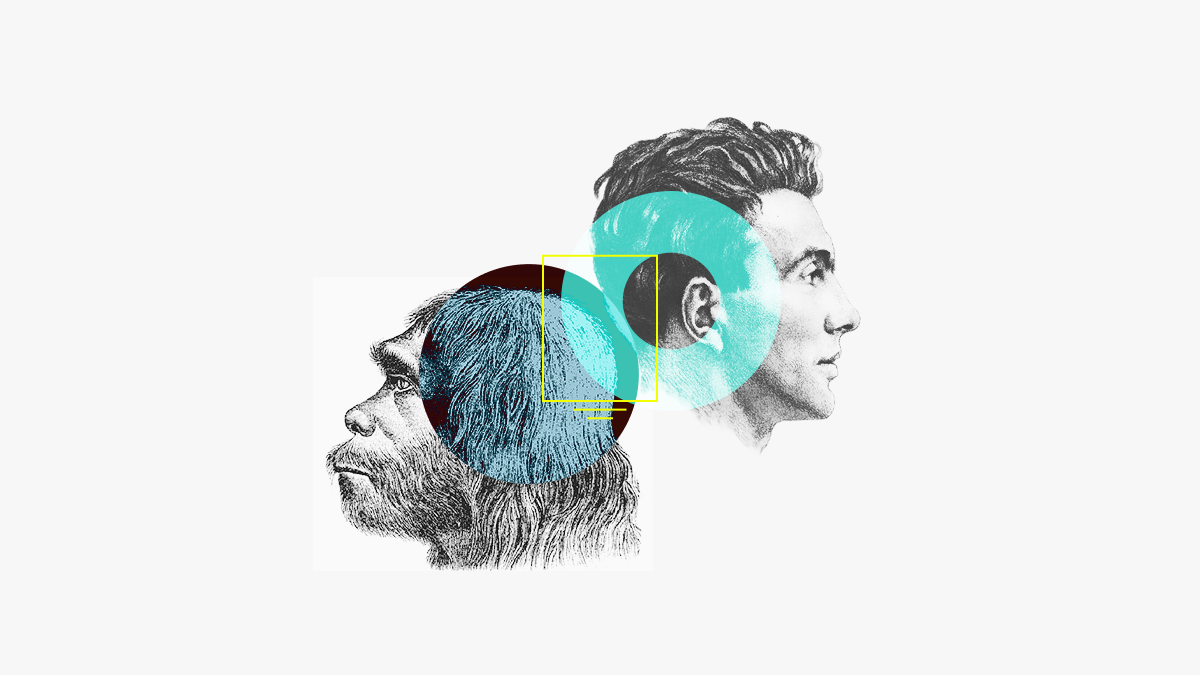
The medium keeps changing. The impulse doesn't.